Rybnik University Education Network
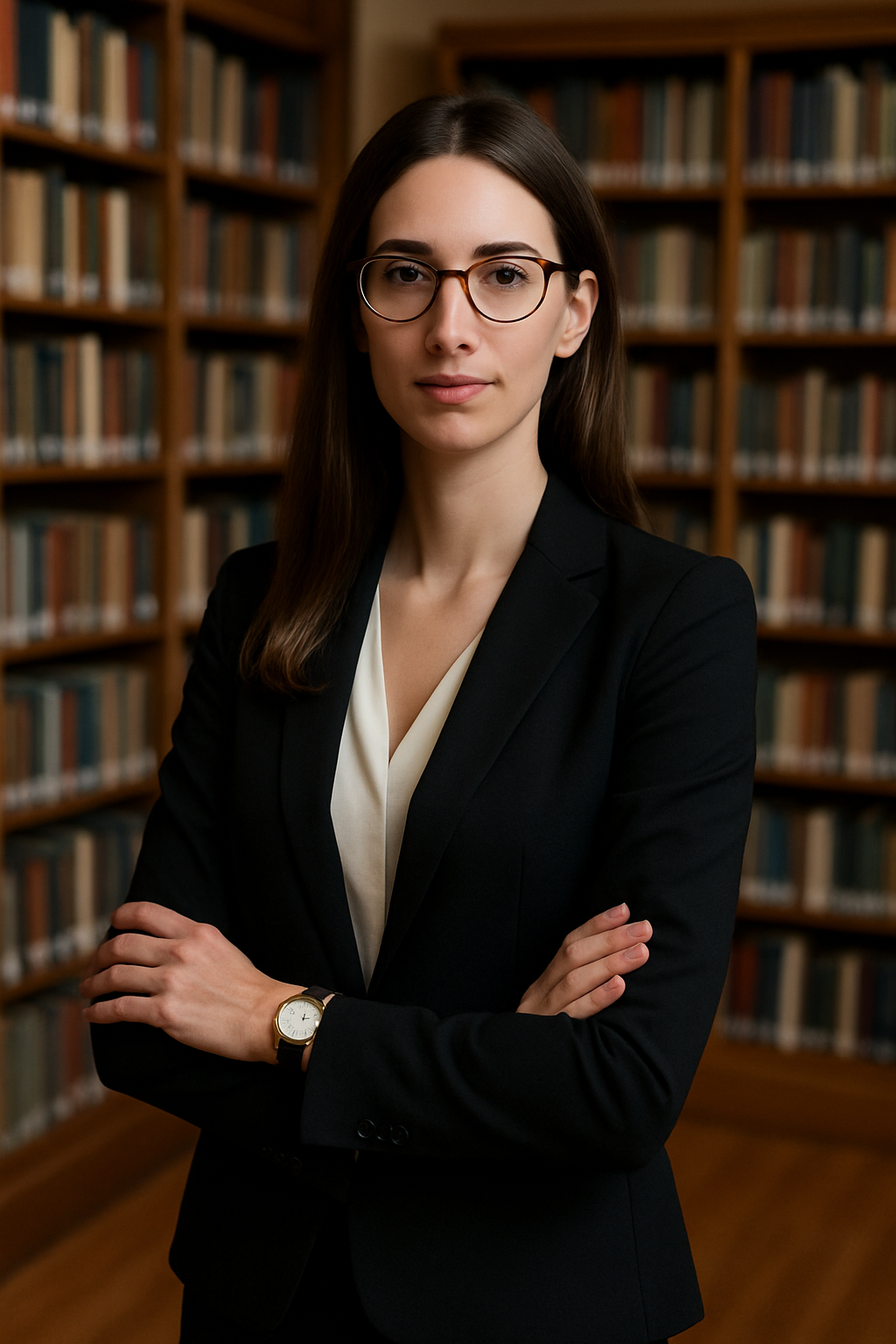
Prof. Dr. Cristina Lazar
Prof. Dr. Cristina Lazar
Professor of Journalism & Communication Studies | PhD in Media and Cultural Communication
“Communication is more than transmitting information—it is the art of shaping meaning, inspiring understanding, and building community.”
I am a professor, researcher, and journalist with more than 18 years of experience in media studies, communication theory, and digital journalism. My academic and professional career bridges the worlds of practice and scholarship, combining newsroom experience with rigorous research in communication, media ethics, and audience behavior.
Currently serving as Professor of Journalism and Communication Studies, I also act as a media consultant and trainer for journalists and communication professionals across Europe. My research focuses on digital transformation in media, crisis communication, and ethical storytelling in the age of social platforms.
I believe journalism and communication education must cultivate critical thinking, creativity, and integrity. My classes encourage students not only to master communication tools, but to understand their social and ethical responsibility in shaping public discourse.
Contact & Connect
Email: Prof.Dr.CristinaLazar@RybnikUniversity.edu.pl
LinkedIn: linkedin.com/in/
Schedule Consultation: calendly.com/
Academic Credentials
PhD in Media and Cultural Communication
Dissertation: “Digital Narratives and the Transformation of Journalism in the 21st Century”
Master of Arts in Communication and Media Studies
(2007)
Bachelor of Arts in Journalism and Public Communication
(2005)
Professional Certifications
- Certificate in Digital Journalism – Reuters Institute, University of Oxford (2022)
- Advanced Media Ethics and Responsibility – UNESCO (2021)
- Strategic Communication and Crisis Management – European Communication Academy (2018)
- Certified Trainer in Media Literacy – European Journalism Centre (2015)
Professional Experience
Professor of Journalism & Communication Studies
| 2017 – Present
- Lectures in Media Ethics, Journalism Theory, and Digital Communication
- Supervises 8 PhD candidates and 25+ master’s theses annually
- Head of the Media, Culture, and Technology Research Group
- Coordinator of the annual “Digital Media Futures” conference
- Co-author of national media literacy curriculum for high schools
Associate Professor of Media and Communication
| 2010 – 2017
- Taught courses in communication theory, new media, and public relations
- Developed online learning platforms for journalism students
- Conducted research on social media impact and audience trust
Journalist & Editorial Consultant
Various Media Outlets | 2002 – 2010
- Worked as editor and investigative reporter for Adevărul and Europa FM
- Covered topics related to education, culture, and European affairs
- Produced award-winning radio documentaries on migration and identity
- Later served as media consultant for communication campaigns and NGOs
Publications & Research Contributions
Conference Presentations:
- “AI and the Future of Journalism Ethics” – European Media Research Forum, Berlin (2024)
- “Women in Media Leadership” – UNESCO Conference, Paris (2023)
- “Public Communication in Times of Crisis” – International Association for Media and Communication Research, Geneva (2022)
Teaching Experience
University Courses:
- Journalism Theory and Practice
- Media Ethics and Law
- Public Relations and Strategic Communication
- Digital Journalism and Multimedia Storytelling
- Research Methods in Communication Studies
Workshops & Training:
- Investigative journalism and data storytelling
- Crisis communication management
- Media literacy and misinformation detection
- Public speaking and persuasive communication
Mentorship:
- Academic advisor for journalism and communication students
- Trainer for young journalists and PR professionals
- Mentor for EU-funded media education projects
What I Teach
1. Journalism & Media Studies (All Levels)
- News writing, editing, and storytelling
- Investigative and multimedia journalism
- Media ethics and law
- Critical media analysis
2. Strategic & Public Communication (Intermediate to Advanced)
- Public relations and institutional communication
- Political and crisis communication strategies
- Reputation management and persuasion techniques
3. Digital Media & New Technologies (Intermediate)
- Social media strategies and analytics
- Multimedia content production
- Emerging trends: AI in journalism, VR storytelling
4. Research in Communication (Advanced)
- Qualitative and quantitative research methods
- Discourse and content analysis
- Communication theory and semiotics
5. Media Literacy & Civic Education (All Levels)
- Understanding fake news and disinformation
- Ethics of information sharing
- The role of journalism in democracy
Teaching Philosophy & Methodology
My Approach:
Teaching communication means teaching responsibility. Every message has power—therefore, students must learn to combine truth, empathy, and clarity in everything they write or say.
Teaching Framework:
- Theory & Context – Introduce concepts with historical and ethical grounding
- Practice & Simulation – Real newsroom or PR case studies
- Analysis & Reflection – Evaluate messages, ethics, and audience perception
- Creation & Feedback – Produce original media content with constructive critique
Core Values in My Teaching:
- Integrity: Truth above speed
- Empathy: Understanding before judging
- Clarity: Communicate ideas that matter
- Courage: Challenge bias and injustice through informed speech
Student Testimonials
Testimonial 1:
“Professor Ionescu’s classes made me fall in love with journalism again. She connects theory with real practice in a way that makes every lecture feel alive.”
— Radu M., Master’s Student in Media Studies
Testimonial 2:
“Her mentorship shaped my career. I learned not only to write better but to think more critically about what truth and ethics mean in journalism.”
— Ana C., Investigative Journalist, Bucharest
Testimonial 3:
“Dr. Ionescu is an inspiring educator who blends academic depth with human warmth. Her guidance opened doors for me in both media and academia.”
— Marta S., PhD Candidate, Vienna
Rates & Scheduling
Private Mentoring & Academic Tutoring (Journalism, Communication, Media Studies)
- Individual Sessions: 230 PLN/hour (€52/hour)
- 10-Session Package: 2,000 PLN (10% off)
- 20-Session Package: 3,700 PLN (18% off)
Group Workshops (2–6 participants):
- 380 PLN/hour total
Availability:
- Weekdays: 17:00 – 21:00 CET
- Saturdays: 09:00 – 14:00 CET
- Sundays: By appointment
Booking Process:
- Email describing your academic or professional goals
- Free 20-minute consultation and plan proposal
- Custom session schedule and learning materials
Cancellation Policy:
- 24h notice: no charge
- <24h: 50% fee
- No-show: full session fee
Languages
Romanian – Native
English – Fluent (C2 level)
French – Fluent (C1 level)
Spanish – Intermediate (B1 level)
Professional Memberships
- European Communication Research and Education Association (ECREA) – Member since 2012
- International Association for Media and Communication Research (IAMCR) – Senior Member
- UNESCO Media Literacy Network – Expert Member
- International Journalists’ Union – Member
Additional Information
Work Environment: Dedicated digital teaching studio with video and podcast recording equipment; access to Adobe Creative Cloud and newsroom simulation software.
Student Requirements: Motivation, openness to dialogue, and curiosity about media’s impact on society.
Preferred Student Profile: Journalism, communication, or PR students; media professionals seeking academic mentorship.
Current Projects: Co-author of “AI and the Future of Journalism Education” (Routledge, forthcoming 2025) and leading a research project on “Digital Ethics and Media Literacy in Eastern Europe.”
The teaching philosophy outlined by Professor Lazar highlights critical values such as integrity and empathy, which are essential for effective communication. In a time when misinformation spreads easily, her approach could play a significant role in shaping responsible journalists. It would be beneficial to explore how these values are instilled in students during practical sessions.
“Ethics of information sharing” is an important topic that resonates well with today’s society, where misinformation can have serious consequences. I’m intrigued by how Professor Lazar addresses this issue with her students and what strategies she teaches them for recognizing reliable sources versus misleading ones during their education.
Professor Lazar’s commitment to mentorship appears commendable, especially considering the diverse projects she is involved with. The fact that she supervises a substantial number of PhD candidates speaks volumes about her dedication. I am curious about the experiences of those candidates under her guidance and how they perceive their journey through academia.
“Digital Media Futures” conference sounds like an engaging event where current trends can be discussed openly among professionals and scholars alike. I wonder what topics are typically covered there and whether students have opportunities to participate or present their work. Events like these could significantly enhance learning experiences for aspiring journalists.
Professor Lazar’s background in both journalism and academia seems to provide a well-rounded perspective on the challenges facing modern media. Her focus on digital transformation and crisis communication is timely, given the rapid changes in how news is consumed. I would be interested in knowing more about her research findings, especially related to audience trust and engagement.
It is interesting to see how Professor Cristina Lazar integrates real-world experience with academic knowledge in her courses. The emphasis on ethics and responsibility in journalism is particularly relevant today. I wonder how her approach influences students’ understanding of their roles as future media professionals. It would be insightful to hear more about the specific case studies she uses in class.
I appreciate the structured methodology that Professor Lazar employs in her teaching. Combining theory with practical application allows students to grasp complex concepts more effectively. The focus on emerging technologies like AI also prepares them for future challenges in journalism. It might be interesting to see how students react to these new tools during their training.
“The balance between creativity and critical thinking emphasized by Professor Lazar is essential for effective communication education. In practice, how does she measure these skills among her students? Understanding the assessment methods used might provide insights into the effectiveness of her teaching style.