Rybnik University Education Network
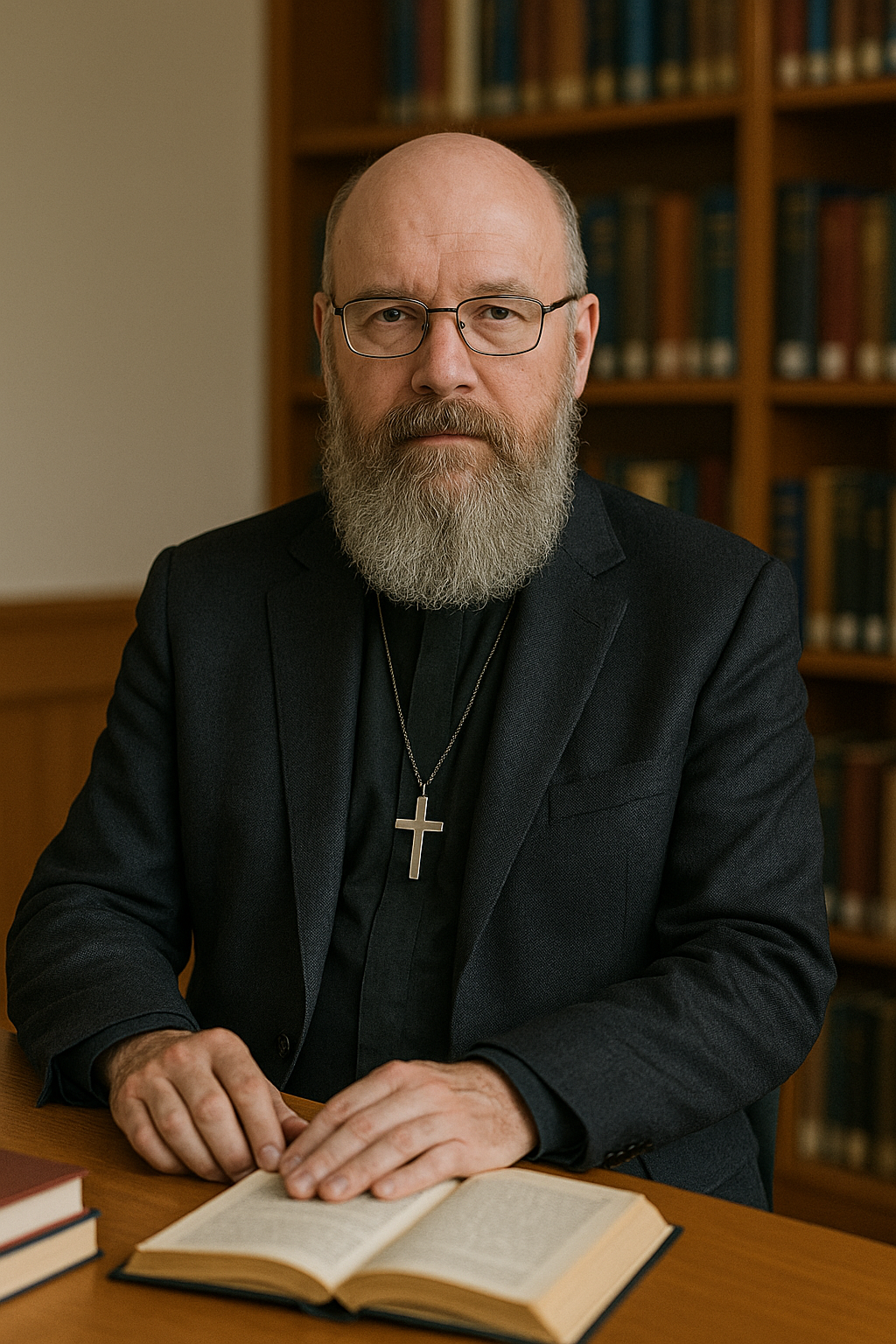
Pr. Prof. Dr. Vasile CIOBANU
Pr. Prof. Dr. Vasile CIOBANU
Professor of Theology, Philosophy & Church History | PhD in Historical Theology
“Faith is the light through which we understand history. Theology, when united with philosophy, helps us see not only what happened—but why it matters.”
I am a theologian, historian, and educator with over 25 years of experience exploring the intersection of faith, reason, and history. My research and teaching focus on the historical development of Christian thought, the dialogue between theology and philosophy, and the role of the Church in shaping cultural identity.
Currently serving as Professor of Theology, Philosophy, and Church History at the University of Orthodox Theology, I also collaborate with several international academic institutions and theological journals. My work seeks to integrate the spiritual heritage of Christianity with contemporary academic reflection and philosophical inquiry.
I believe theology and history are not static disciplines—they are living conversations that illuminate humanity’s search for meaning. My classes are designed to awaken intellectual curiosity, deepen spiritual understanding, and encourage responsible engagement with the past.
Contact & Connect
Email: Pr.Dr.Vasile.CIOBANU@RybnikUniversity.edu.pl
LinkedIn: linkedin.com/in/
Schedule Consultation: calendly.com/
Academic Credentials
PhD in Historical Theology
Dissertation: “The Development of Patristic Thought in Eastern Christianity: From the Cappadocians to the Hesychasts”
Master of Theology (M.Th.) in Church History & Dogmatics
(2000)
Bachelor of Theology and Philosophy
(1997)
Professional Certifications
Certificate in Patristic Studies – (2018)
Advanced Certificate in Philosophy of Religion – (2016)
Training in Interreligious Dialogue and Peacebuilding – (2015)
Certified Lecturer in Ethics and Religious Education – (2005)
Professional Experience
Professor of Theology, Philosophy & Church History
| 2014 – Present
Teaching courses in Historical Theology, Patristics, and Christian Philosophy
Supervising doctoral research on theology, history, and culture
Director of the Center for Religious and Historical Studies
Co-editor of the Journal Christian Studies
Associate Professor of Church History
| 2005 – 2014
Lectured on the history of the Orthodox Church, early Christian writers, and medieval theology
Developed new courses on “Theology and European Civilization”
Participated in research grants focused on Byzantine thought and Christian identity
Priest & Pastoral Educator
| 1997 – 2005
Parish priest and theological instructor in pastoral care and catechetics
Conducted spiritual education programs for youth and adult catechumens
Wrote numerous homilies, essays, and theological reflections for church publications
Publications & Research Contributions
Conference Presentations:
“Faith and Philosophy in Late Antiquity” – International Theological Congress, Rome (2024)
“The Legacy of the Church Fathers in Modern Theology” – Patristic Symposium, Thessaloniki (2023)
“Christianity and Cultural Identity in Eastern Europe” – European Religion Forum, Krakow (2022)
Teaching Experience
University Courses:
History of the Christian Church (1st–21st century)
Patristic Theology and Early Christian Writings
Philosophy of Religion and Metaphysics
Christian Ethics and Social Teaching
Theology of Culture and Civilization
Seminars & Workshops:
Theological Hermeneutics and Historical Method
Faith and Reason in Contemporary Society
Eastern Christianity and Western Philosophy
Interreligious Dialogue and Comparative Theology
Mentorship:
Supervisor for doctoral and master’s students in theology, philosophy, and history
Mentor for clergy continuing education programs
Academic advisor for interfaith dialogue initiatives
What I Teach
1. Historical Theology (All Levels)
Development of Christian doctrine
Early Church councils and heresies
The Fathers of the Church and theological continuity
2. Patristics & Byzantine Thought (Intermediate to Advanced)
Writings of St. Basil, Gregory of Nyssa, and Maximus the Confessor
Hesychasm and mystical theology
Theological anthropology and deification
3. Philosophy of Religion (Intermediate)
Faith and reason in ancient and modern philosophy
The problem of evil and the existence of God
Ethics, metaphysics, and epistemology in theology
4. Church History & Cultural Context (All Levels)
Christianity and European civilization
The Reformation and modernity
Religion and the public sphere
5. Theology and Society (Advanced)
Christian social thought and moral theology
Dialogue between theology, science, and culture
The Church’s role in contemporary moral debates
Teaching Philosophy & Methodology
My Approach:
Theology and history must be taught not as distant knowledge, but as living wisdom. My pedagogy unites academic rigor with spiritual reflection, encouraging students to see faith as both truth and encounter.
Teaching Framework:
Text & Context: Study primary sources with historical analysis
Dialogue & Discussion: Engage philosophical and theological questions
Reflection & Integration: Apply concepts to personal and cultural contexts
Formation: Cultivate intellectual, moral, and spiritual maturity
Core Values in My Teaching:
Truth: Seek understanding beyond opinion
Tradition: Learn from the wisdom of the Fathers
Reason: Balance faith with critical inquiry
Relevance: Connect the Gospel to today’s human realities
Student Testimonials
Testimonial 1:
“Professor Popa’s lectures are transformative. He teaches history and theology as one story—the story of humanity’s encounter with God.”
— Andrei M., PhD Candidate in Historical Theology
Testimonial 2:
“His teaching style unites depth and compassion. Every discussion feels like a dialogue between faith and reason.”
— Irina L., Master’s Student in Religious Studies
Testimonial 3:
“Prof. Popa’s mentorship helped me understand theology not only as knowledge, but as a way of life.”
— Fr. Ioan D., Orthodox Priest, Sibiu
Rates & Scheduling
Private Tutoring & Academic Mentorship (Theology, Philosophy, History)
Individual Sessions: 230 PLN/hour (€52/hour)
10-Session Package: 2,050 PLN (10% off)
20-Session Package: 3,800 PLN (17% off)
Group Sessions (2–5 participants):
360 PLN/hour total
Availability:
Weekdays: 17:00 – 21:00 CET
Saturdays: 09:00 – 14:00 CET
Sundays: By appointment
Booking Process:
Send an email outlining your academic or theological interests
Free 20-minute consultation
Personalized learning or research plan
Cancellation Policy:
24h notice: No charge
<24h: 50% fee
No-show: Full session fee
Languages
Romanian – Native
English – Fluent (C2 level)
Greek – Reading and conversational proficiency
French – Intermediate (B1 level)
Professional Memberships
International Orthodox Theological Association (IOTA) – Member since 2016
European Academy of Religion – Senior Member
European Society for Church History – (since 2022)
Fellowship of Orthodox Scholars in the Americas – Contributing Member
Additional Information
Work Environment: Private academic office with digital theological library, ancient texts database, and professional video setup for online teaching.
Student Requirements: Interest in theology, philosophy, and history; openness to reflective dialogue.
Preferred Student Profile: Theology students, historians, clergy, or individuals seeking intellectual and spiritual formation.
Current Projects: Editor of “Faith and Civilization: Theology in the Modern World” (Cambridge University Press, forthcoming 2025) and coordinator of the international research project “Christian Identity and Cultural Memory in Postmodern Europe.”
Professor Vasile Ciobanu’s extensive background in theology and philosophy is quite impressive. His approach to teaching, where he intertwines faith with historical context, seems to provide a comprehensive understanding of these subjects. It’s interesting to see how he emphasizes the living nature of theology and history. This perspective could benefit students by fostering deeper intellectual engagement.
The focus on interreligious dialogue and cultural identity within Professor Ciobanu’s teachings is particularly relevant today. In a world increasingly divided by differing beliefs, fostering understanding through education can play a vital role in promoting peace and tolerance. I’m curious about how his teachings are received by students from diverse backgrounds.
The teaching methodology described here resonates with many modern educational philosophies that prioritize student engagement and critical thinking. By framing theology as ‘living wisdom,’ Professor Ciobanu encourages students to relate academic learning to their personal lives. It would be insightful to know how this approach impacts student outcomes over time.
‘Faith is the light through which we understand history’ is a powerful statement made by Professor Ciobanu. It encapsulates the essence of connecting faith with historical inquiry, making it relevant for today’s learners who seek meaning beyond mere facts. This blending of disciplines might attract those interested in exploring deeper existential questions within an academic framework.
‘Christianity and European civilization’ is another vital area covered by Professor Ciobanu, linking religious thought directly with cultural history. Understanding this connection could enrich discussions around identity and values in today’s multicultural society, making his courses especially relevant for future leaders seeking holistic insights into societal dynamics.
‘The Church’s role in contemporary moral debates’ suggests an active engagement with current societal issues within Professor Ciobanu’s teachings. This approach could empower students to navigate complex ethical dilemmas they may face in their personal or professional lives while grounding their understanding in theological principles.
Professor Ciobanu’s research interests reflect significant aspects of Christian thought that have evolved over time. The mention of Byzantine thought as part of his curriculum indicates a deep engagement with historical contexts that have shaped modern theology. I wonder how this historical perspective influences current theological debates among his students.
I appreciate the emphasis on mentorship in Professor Ciobanu’s work. His dedication to guiding students through their academic journeys seems commendable. The personal approach he takes, viewing theology as a way of life rather than just a subject, may inspire students not only academically but also personally. It would be interesting to hear more about specific student experiences in his classes.
The integration of spiritual heritage with contemporary academic reflection is an intriguing concept highlighted in this article. I believe that the dialogue between theology and philosophy can lead to profound insights, especially in today’s complex societal landscape. Professor Ciobanu’s classes appear to challenge students to think critically about their beliefs and the historical narratives that shape them.